

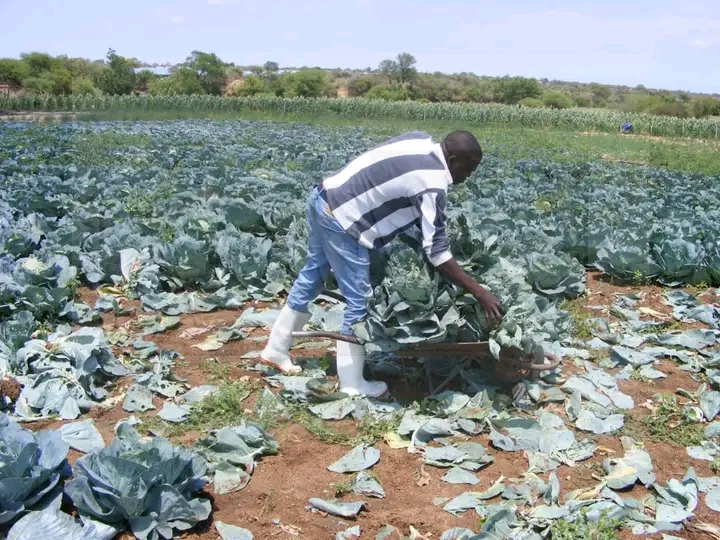
Diamondback Moth Infestation Devastates Shashe Bridge Cabbage Farms – Urgent Action Needed. Vegetable farmers in the Shashe Bridge area near Francistown are facing a serious setback as a Diamondback Moth (DBM) infestation wreaks havoc on cabbage crops, causing losses running into tens of thousands of Pula.
The DBM, a known pest that feeds on the leaves of cruciferous crops, has destroyed large swathes of cabbage farms, threatening the livelihoods of local farmers and raising concerns for Botswana’s vegetable supply chain.
Local farmer Mbonisi Moyo shared the impact on his farm: “I have lost an entire crop population of 10,000 cabbage seedlings, valued at P100,000. I am devastated. I have invested so much time and resources into planting this crop, and now it is all gone. I have to start again from scratch.”
Agricultural experts warn that if left unmanaged, DBM infestations can spread rapidly, causing significant financial losses and disrupting local markets. Farmers are being advised to implement integrated pest management strategies, including regular monitoring, crop rotation, and the careful use of approved biological or chemical controls.
The outbreak highlights the vulnerability of Botswana’s small-scale vegetable sector to pest pressures and underscores the need for support mechanisms such as access to pest management resources, insurance products, and advisory services.
For agribusiness entrepreneurs, the DBM crisis also presents an opportunity to innovate solutions — from pest-resistant seeds and organic pesticides to digital monitoring systems — that can safeguard crops and ensure sustainability in the horticultural sector.
Join 'Botswana Entrepreneurs Magazine' WhatsApp Channel
Stay inspired with the latest entrepreneurship news in Botswana — delivered directly to your WhatsApp.
CLICK HERE TO JOIN